The Intermediate Edge
Welcome to the intermediate level! You have already mastered your padel fundamentals: the continental grip, standard wall play, and basic positioning. Now, it's time to learn the shots that separate recreational players from competitive ones.
Intermediate padel requires thinking two shots ahead. You're not just hitting balls anymore—you're setting up patterns, creating traps, and building pressure systematically.
The "Fridge" Strategy
In competitive doubles, teams consistently target the weaker opponent (putting them in the "fridge" so to speak). This breaks down their game statistically and builds psychological pressure. At this level, you must learn to execute high-percentage shots and handle sustained attacks.
Aerial Dominance: Bandeja & Vibora
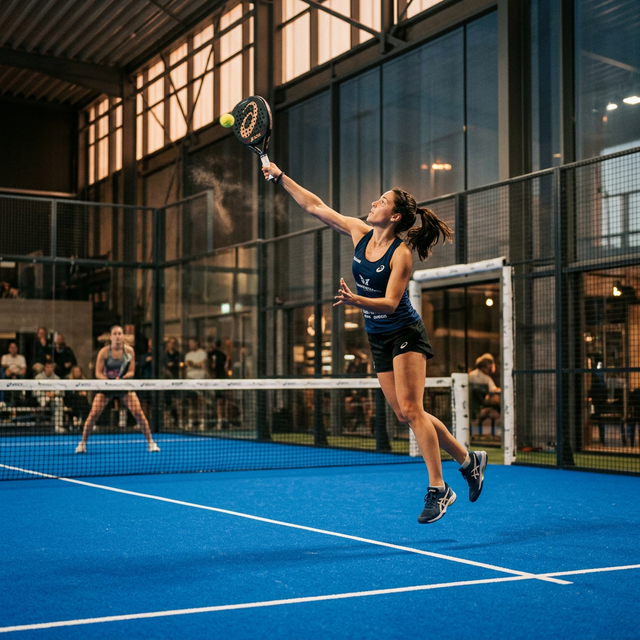
Once you control the net, opponents will test you with lobs. As an intermediate player, you no longer let these bounce. You execute aggressive, controlled overheads to maintain your net position.
The Bandeja (The Tray)
Think of the Bandeja as your "stay at the net" shot. It's an overhead with topspin (or slice) that lands deep. The goal isn't a winner; it's to push opponents back into the corners.
- Setup: Sideways stance, high elbow, continental grip.
- Action: Contact the ball slightly in front of your head, brushing through it to create spin.
- Goal: High accuracy (70%+) landing deep in the court, giving you time to recover to the net.
The Vibora (The Snake)
The Bandeja's aggressive cousin. The Vibora uses lateral sidespin to create difficult angles and unpredictable bounces off the glass.
- Action: Brush across the ball laterally (left to right for right-handers).
- Result: The ball curves in flight and accelerates sharply after hitting the side walls.
The Chiquita Weapon
The Chiquita is padel's most subtle yet powerful shot. It is a low, soft shot hit with heavy slice that barely clears the net and lands right at your opponent's feet while they are rushing the net.
Why it works:
It completely changes the rally dynamics. Opponents expecting pace suddenly face a soft shot requiring delicate touch, forcing a weak, pop-up volley which you and your partner can then smash for a winner. Use it to neutralize aggressive attacking players.
Doubles Formations
Understanding formations is what truly elevates you from beginner status. It's not just about lateral movement; it's about strategic positioning.
Traditional vs. Australian Formation
Server on one side, partner at the net on the opposite diagonal side. Standard coverage. Easy for beginners, but predictable.
Server and net player cover the same side of the court during serve. When serving, the server sprints diagonally across to cover the open side. Professional players use the Australian formation 80% of the time to disrupt return angles.
The Windshield Wiper Principle:
Both partners move laterally together, like windshield wipers. When the ball goes left, both shift left. This maintains formation integrity and plugs the dreaded gap in the middle of the court.
Mental Conditioning & Pressure
At the intermediate tournament level, matches are won and lost in the mind. High-pressure points (like 30-40, or tiebreaks) require high-percentage shot selection. When tension is high, increase your margin for error, target the middle of the court, and avoid risky down-the-line attempts.
Mastered the Intermediate Level?
If you can hit the Vibora with your eyes closed, it's time to go pro.
Access Advanced Strategies (The Viper)